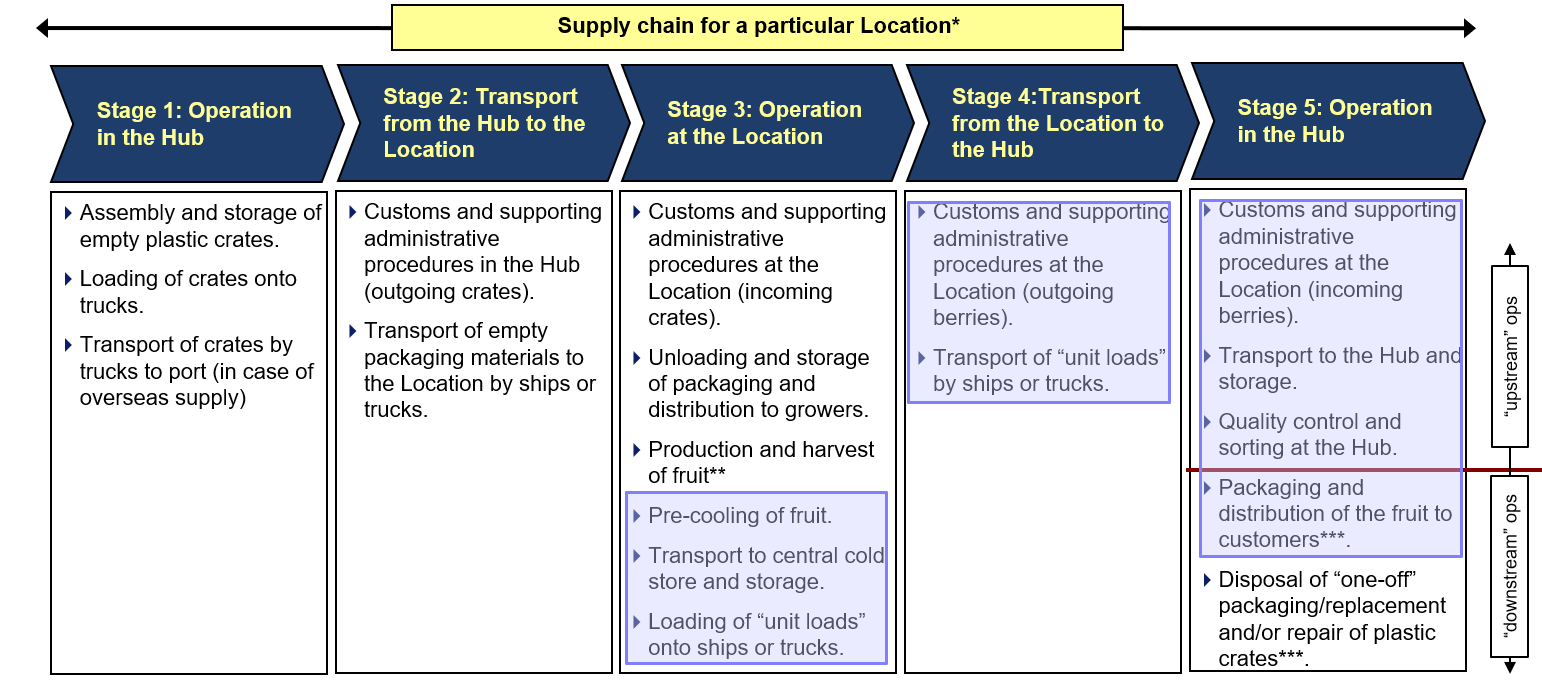
Design for Logistics & Transport logically complements the previous two skills sets (DFM/A & DTCT) as it closes the value chain from the supplier to the customer (see Exhibit 3). By designing an efficient Logistics and Transport solution, we can reduce logistics costs, eliminate transport inefficiencies, improve lead time for delivery and delivery accuracy (to our factories from our suppliers and our product delivery to the final customer), improve transport safety & parts’ protection and achieve a more operationally effective supply chain (both inbound and outbound). The impact of packaging design on the transport and logistics effectiveness is often underestimated and long forgotten until a very mature stage of product development when there is little time and possibility left for making any changes or adjustments. The misunderstanding of this importance comes from a lack of proper modelling of the true cost allocation per each logistics operation. When the true cost drivers are better understood, then the logical benefits of upfront logistics and transport design are easier to accept.
Duration
The training lasts one day in its fully blown format that allows sufficient time for the course content to be absorbed and processed by the participants. The real application of DFLT becomes part of the 3P workshop, where participants can implement what they learnt during the training.
Who is it for?
- Project/Program Manager
- Product Management
- Procurement (Strategic and Factory)
- Internal Manufacturing Quality Assurance
- Supplier Quality Assistance
- Logistics/Transport
- Sales
- Production Technology
- Factory Equipment Maintenance
- Suppliers
Content
- Modelling of supply chain practices leading to effective discovery of the cost drivers
- Real-life case studies demonstrating how to effectively analyse and redesign an existing supply-chain transport and logistics system
- Cost modelling exercise
- Concept of financial contribution as an unbiased indicator of the supply chain logistics cost efficiency
- Impact of correctly selected packaging on product quality, safety, elimination of unnecessary handling operations, warehousing, product line delivery, and ergonomics
- Lean Value Stream Mapping concept
Delivery Options
- Initial consultation: virtual 2-hour meeting (free of charge)
- Virtual delivery of training modules (2 half-day sessions)
- Physical on-site delivery over one day is a possibility
- Agile, iterative & practical (on-site) facilitation and support in developing & implementing DTCT in own factory in a real project by merging the DTCT application with the 3P workshop. Memo: this scenario typically requires 1-2 days of preparation for the 3P and a virtual 1-day training covering the basic DTCT techniques, followed by a 3-5-day 3P workshop (at the client and/or supplier’s manufacturing site)
Objectives
- Equip participants with the knowledge and skills to design products that are easy to package and transport
- Address incoming parts poor quality more effectively
- Improve product reliability due to efficient transport and packaging
- Reduce warranty costs towards own customers due to the elimination of defects during transport & handling
- Integrate DFLT in the product development process early
Outcomes
- Optimized product design for transport and logistics (cost, efficiency, protection & safety)