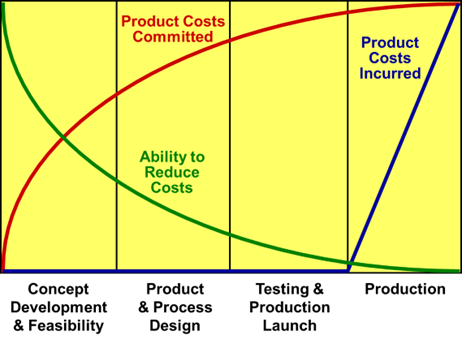
This Design for Serviceability (“DFS”) training aims to improve the product design, that they are easier to service, maintain, and repair, ultimately reducing total costs and improving customer satisfaction. This is achieved through early involvement of service engineers in the design process, consideration of customer needs, and application of various design principles.
Duration
The training lasts two days in its fully blown format that allows sufficient time for the course content to be absorbed and processed by the participants. However, it is possible to scale down the training to 1 day, subject to agreement per initial consultation. The real application of DFS becomes part of the 3P workshop, where participants can implement what they learnt during the training.
Who is it for?
- Project/Program Manager
- Product Management
- Procurement (Strategic and Factory)
- Internal Manufacturing Quality Assurance
- Supplier Quality Assistance
- Sales
- Customer Service
- Service/Maintenance Engineers
- Production Technology
- Suppliers (optional)
Content
- Introduction and basic concepts and principles
- Understand how Design for Service complements all other design requirements
- The Business Case for Serviceability
- Understand Customer perception and requirements for serviceability
- Cost of servicing/ Total Cost of Ownership
- Robust Design Concept and Design for Service
- Implementation of “DFS”
Delivery Options
- Initial consultation: virtual 2-hour meeting (free of charge)
- Virtual delivery of training modules (4 half-day sessions)
- Physical on-site delivery over two full days is a possibility
- Agile, iterative & practical (on-site) facilitation and support in developing & implementing DFS in own factory and at suppliers’ in a real project by merging the DFS application with the 3P workshop. Memo: this scenario typically requires 1-2 days of preparation for the 3P and a virtual 1-day training covering the basic DFS techniques, followed by a 3–5-day 3P workshop (at the client and/or supplier’s manufacturing site)
Objectives
- Equip participants with the knowledge and skills to design products that are easy to service and maintain.
- Address customer complaints more effectively
- Improve product reliability
- Reduce warranty costs
- Help reduce the time to make repairs
- Integrate serviceability as a key consideration in the product development process
- Consider Serviceability as a new business model and opportunity for revenue generation
Outcomes
- Optimized product design for service, reducing cost of service, simplifying service complexity, minimizing the number of service parts, reducing skill level required for service personnel, and improving product reliability